
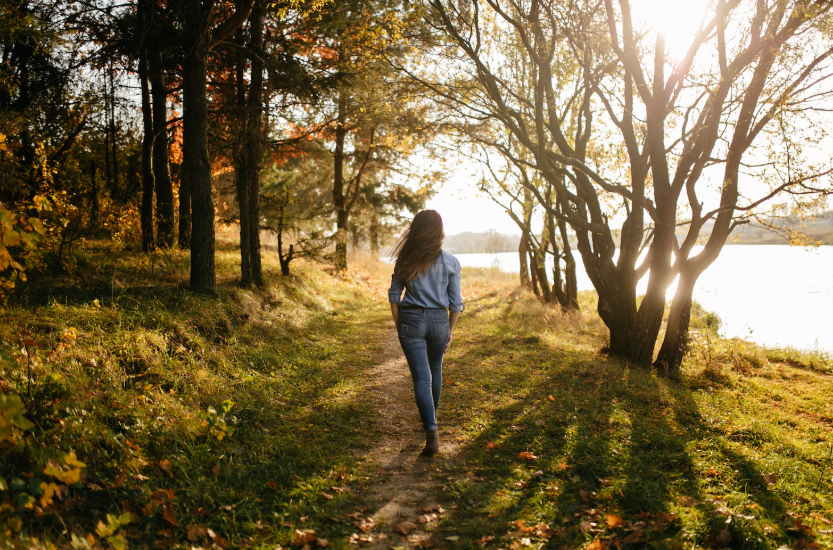
Nature walks are often treated as exercise or something to squeeze in between errands. However, with a slight shift in intention, a simple walk can become a mini-retreat that delivers the powerful benefits of a mindful nature walk.
These retreats don’t require special locations. They begin wherever you can step outside.
Nature walks are a restorative pause that calms the nervous system, sharpens awareness, and costs nothing. When walking becomes mindful, it delivers many of the benefits people seek from expensive wellness experiences, without the price tag or planning.
Why Nature Walks Are Naturally Restorative
Humans are wired to respond to natural environments. Trees, water, open skies, and uneven terrain engage the senses in a way that gently pulls attention out of stress loops. This effect, sometimes called “soft fascination, allows the brain to rest without becoming bored.
Unlike digital stimulation, nature offers variety without urgency. Sounds shift, light changes, and movement feels organic rather than demanding. Even short exposure reduces mental fatigue and improves mood.
A mindful walk amplifies these benefits by slowing the pace and redirecting attention from thinking to sensing.
See How to Transform Daily Routines Into Low-Cost Rituals to turn everyday habits into restorative pauses.
How to Shift a Regular Walk Into a Mini-Retreat
The difference between a walk and a retreat isn’t distance; it’s focus. Start by setting a simple intention before you step outside. This might be “notice five sounds,” “walk without checking time,” or “breathe deeply for the first five minutes.”
Move slightly slower than usual. Slowing down changes how your body processes the environment and signals safety to the nervous system. Let your gaze soften instead of scanning ahead.
Avoid multitasking. Leave podcasts, music, and phone use behind when possible. Silence allows subtle details, such as wind, birds, and footsteps, to emerge and anchor attention.
Check out No-Spend Weekend Adventures for Couples or Friends for simple, enriching activities.
Using the Senses to Deepen the Experience
Mindful walking engages all five senses. Notice how the ground feels underfoot. Observe temperature shifts in sun and shade. Listen for layers of sound rather than individual noises.
Smell is especially grounding. Earth, leaves, rain, or seasonal air changes bring awareness into the present moment instantly. Even in urban settings, sensory cues exist if you look for them.
Touch adds another layer. Running a hand along a fence, tree bark, or stone can connect movement to awareness without requiring formal meditation.
Explore The 30-Day Reset for Reducing Mindless Purchases for practical strategies to curb stress-driven spending.
Creating Boundaries That Make the Walk Feel Like a Retreat
Retreats feel special because they’re bound. Create a beginning and an end. Start the walk with a breath or phrase like “this time is mine.” End it by pausing briefly before reentering daily activity.
Choose a consistent route if possible. Familiarity reduces decision-making and allows deeper noticing over time. Watching seasonal changes on the same path reinforces continuity and calm.
If your time is limited, even ten minutes can provide benefits. A short, intentional walk is more restorative than a long, distracted one.
Don’t miss Five-Minute Habits That Save You an Hour a Day for small practices that improve daily calm.
Why Mindful Walks Reduce Stress Spending
Stress often drives spending through convenience purchases, treats, or digital distractions that promise relief. Mindful walks address the root cause by lowering baseline stress and restoring emotional balance.
When the nervous system settles, cravings for stimulation soften. Decisions become less reactive. You’re more likely to pause instead of reaching for quick fixes.
Over time, these mini-retreats replace paid coping mechanisms with free restoration. The result is better mental clarity, improved mood, and fewer impulse-driven expenses.
Turning nature walks into mindful retreats isn’t about adding something new to your life. It’s about upgrading what you already do. When walking becomes a source of restoration rather than just movement, well-being becomes accessible; quietly, consistently, and without cost.