
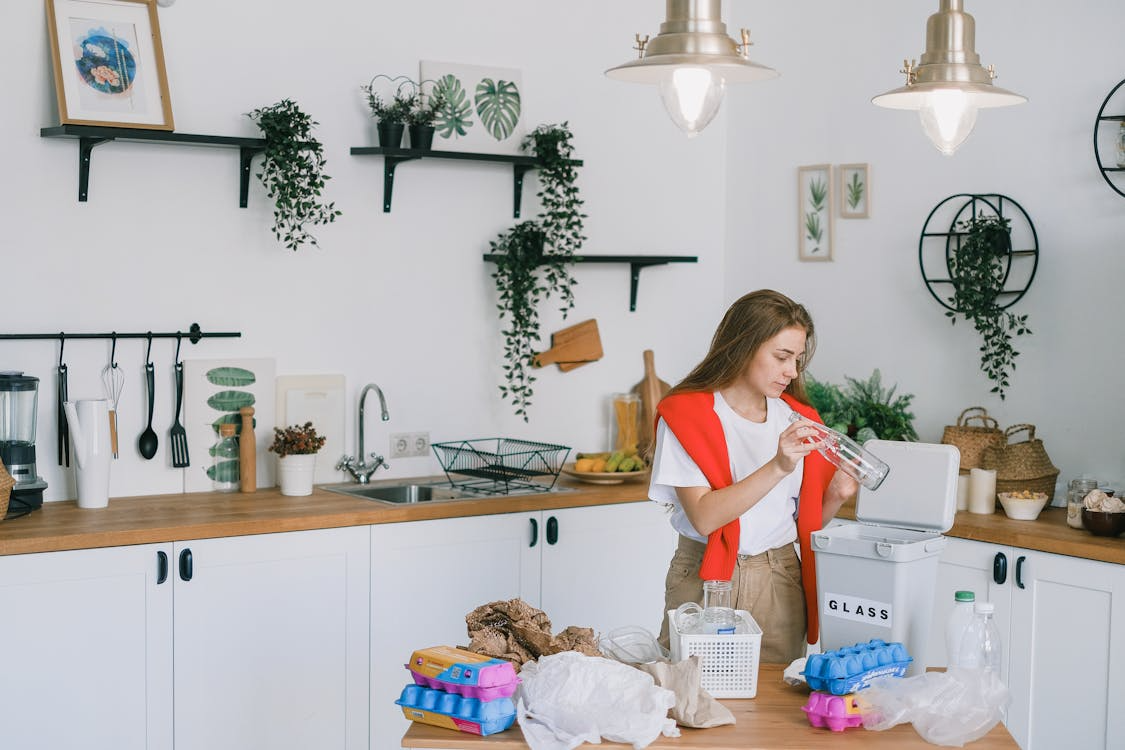
When you shift focus from buying solutions to using existing resources, waste drops naturally, and spending slows without added effort.
A low-waste home is often portrayed as something you buy into, such as matching containers, specialty products, and aesthetic upgrades. In reality, the most effective low-waste systems are built from what you already own.
Reducing waste isn’t about perfection or purchasing replacements; it’s about rethinking how everyday items are used, reused, and repurposed.
Why Low-Waste Starts With Awareness, Not Products
Most waste comes from habits, not a lack of supplies. Before replacing anything, take note of what you throw away most often to identify where change would matter. Food scraps, packaging, paper products, and single-use items typically make up the majority of household waste.
Once patterns are visible, solutions often become apparent and can be found easily. Paper towels can be replaced with old cloths. Disposable containers can be swapped for jars already in your cupboard. Packaging waste decreases when leftovers are intentionally stored rather than forgotten.
Low-waste success depends more on attention than acquisition.
Explore How to Build a ‘Use What You Have’ Mindset Without Feeling Restricted for low-waste solutions.
How to Repurpose What You Already Own
Your home already contains dozens of potential low-waste tools. Glass jars can serve as food storage, bulk containers, or organizers. Old t-shirts turn into cleaning rags. Towels past their prime often become floorcloths or pet towels.
Cardboard boxes work as drawer dividers. Mismatched containers handle leftovers just as well as uniform sets. Reusable bags, even random totes or backpacks, replace disposable ones without issue.
The goal isn’t aesthetics. Its function. When items already exist, using them incurs no additional costs and avoids unnecessary replacement cycles.
Check out The 30-Day Reset for Reducing Mindless Purchases to curb impulse buys.
Reducing Food Waste Without Buying Storage Systems
Food waste is one of the most significant contributors to household waste, and one of the easiest to reduce. Start by keeping food visible. Forgotten food spoils faster than food that’s seen daily.
Use transparent containers you already own, or move leftovers to eye level in the fridge. Store produce where you’ll see it, not buried in drawers. Labeling with masking tape and a marker helps track what needs to be used first.
Plan “use-up” meals based on what’s already open. Soups, stir-fries, and casseroles easily absorb odds and ends. Freezing leftovers extends their life without additional equipment.
For a simple way to reduce food waste, see How to Create a Capsule Kitchen for Cheaper, Easier Meals.
Replacing Disposable Habits With Reusable Ones
Most disposable habits exist because they’re convenient, not because alternatives don’t exist. Switching doesn’t require new products; it needs new defaults.
Reusable water bottles, mugs, and utensils often already exist in your kitchen. Keep them accessible so they’re the easy choice. Use cloth napkins or dish towels instead of paper ones. Designate one drawer or bin for reusables so grabbing them becomes automatic.
Even the packaging can be reused. Boxes become storage. Envelopes become scrap paper. Wrapping paper becomes gift bags, reused year after year.
Don’t miss How to Learn a New Skill Using Mostly Free Resources to build practical skills without spending.
Building a Sustainable Low-Waste Rhythm
Low-waste living works best when it fits your life. Choose one area at a time, such as the kitchen, the bathroom, or cleaning routines, and adjust gradually. Focus on reducing repeat waste rather than eliminating everything at once.
Avoid the trap of replacing items just because they’re labeled “eco-friendly.” Using what you have until it wears out is almost always the lower-waste option.
A low-waste home isn’t something you purchase. It’s something you practice. Each reuse reinforces the habit, builds confidence, and keeps money in your pocket instead of in the trash.
When waste drops, spending follows, not through sacrifice, but through more innovative use of what’s already there.