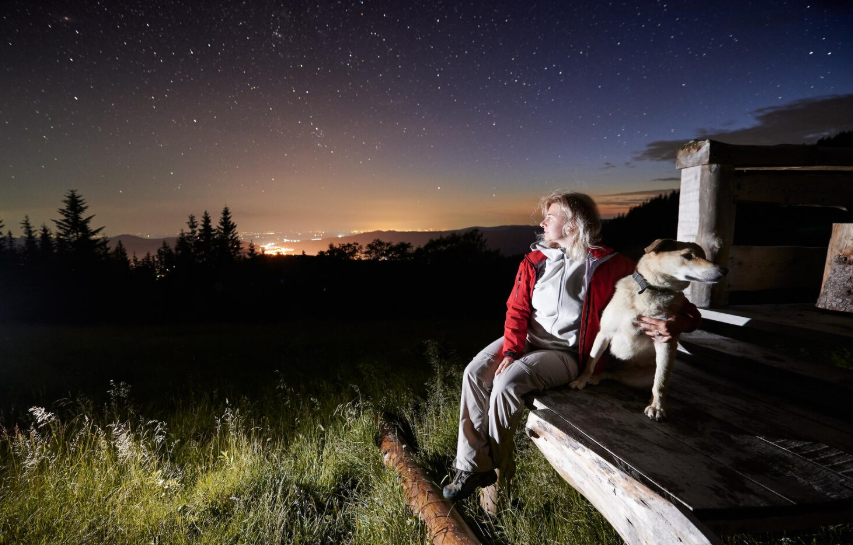
Stargazing is one of the best free hobbies for adults because it requires almost nothing to get started: no tickets, no gear, and no travel. All you need is a clear night and a willingness to look up.
Yet, despite its simplicity, backyard stargazing offers something rare: a unique perspective. It slows time, sparks curiosity, and reconnects you with rhythms far larger than daily routines, all without spending a dime.
In a world built around constant stimulation, stargazing offers quiet enrichment that costs nothing and yields a great deal in return.
Why Stargazing Feels So Restorative
Stargazing naturally pulls attention outward. Instead of screens or schedules, your focus shifts to distance, scale, and motion. This mental shift reduces stress and interrupts the constant sense of urgency that drives many spending habits.
Looking at the night sky also engages curiosity rather than consumption. You’re not buying entertainment; you’re discovering it. That distinction matters because curiosity satisfies the same need for novelty without triggering spending.
Even brief stargazing sessions can reset your mood. Ten minutes outside at night often feels more grounding than an hour of passive entertainment indoors.
Explore Turning Nature Walks Into Mindful Mini-Retreats for another calming, no-cost ritual.
What You Can See Without Any Equipment
Many people assume stargazing requires telescopes or technical knowledge. In reality, the naked eye reveals plenty. The Moon’s phases, bright planets, constellations, meteor showers, and even the Milky Way (in darker areas) are all visible without tools, according to NASA’s sky watching guide.
Planets like Venus, Jupiter, and Mars are often among the brightest objects in the sky. Seasonal constellations appear predictably, making it easy to learn them gradually. Watching the sky change over weeks and months builds familiarity and anticipation.
Learning a little at a time keeps the hobby accessible and manageable. You don’t need to identify everything; noticing patterns is enough.
Discover How to Create a ‘Weekend Reset’ Routine That Saves You Money All Week Long for a weekly structure.
How to Make Stargazing a Regular Habit
Consistency matters more than duration. Stepping outside at the same time, a few nights a week, builds awareness of how the sky moves. Over time, you’ll start recognizing stars instinctively without the need for guides.
Choose a comfortable spot. A chair, blanket, or simply standing in the yard makes the experience easier to repeat. Allow your eyes to adjust to the dark for a few minutes; this significantly improves visibility.
Weather and moon phases can affect visibility, so being flexible is helpful. Some nights are about detail; others are about atmosphere. Both count.
Try The $10 Curiosity Challenge: Explore Something New Every Week to spark low-cost weekly ideas.
Using Free Tools Without Turning It Into a Project
While stargazing can be entirely unplugged, optional free tools can enhance learning without adding cost. Free star map apps, printable charts, or library books help identify objects when curiosity strikes.
The key is using tools lightly. Avoid turning stargazing into another task to optimize. Let tools support curiosity, not replace it.
Keeping it casual preserves the hobby’s calming effect.
Don’t miss Cheap Ways to Explore Your City’s History for another free, curiosity-driven experience.
Why Stargazing Adds Long-Term Value to Life
Stargazing deepens appreciation for time, cycles, and scale. This perspective subtly shifts priorities. When you regularly engage with something vast and timeless, many day-to-day pressures, including spending urges, lose their intensity.
The hobby also grows with you. Over time, you may learn more, notice patterns, or choose to add equipment, but none of that is required for enrichment.
Most importantly, stargazing reminds you that wonder doesn’t have to be purchased. Some of the most meaningful experiences are already overhead, waiting patiently.
Backyard stargazing proves that fulfillment doesn’t always come from doing more or spending more. Sometimes, it comes from standing still, looking up, and letting curiosity lead the way.